
Everyone feels anxious sometimes. It’s part of being human. That adrenaline rush before a big presentation, the quickened heartbeat when faced with uncertainty, the whirlwind thoughts you can’t seem to quiet down late at night. When we think about anxiety it’s important to note that it is our body’s natural response to danger. When your mind perceives stress it triggers the hormones that cause anxiety in order to prepare you for possible defence. It’s when this feeling becomes constant and begins to interfere with your daily life, that it becomes an issue. It’s no longer protecting you; It’s causing you to fight against yourself.
Anxiety deeply affects people everyday. Whether it’s physically, emotionally, or mentally, this state of high alert takes its toll. To regain your sense of calm, it’s important to spend time understanding your anxiety. This is how you can learn to soften and live with it, rather than letting it control you. Anxiety is not a defining quality. It is something you experience but is not who you are.
Anxiety is not always obvious. Sometimes it does present as what we “know” anxiety to be. Such as a racing heart, tight chest, or those sweaty palms we’ve all experienced. Other times it’s more internal and can often go unnoticed. For example, laying awake at night unable to stop thinking because your brain is replaying the same worries again and again. 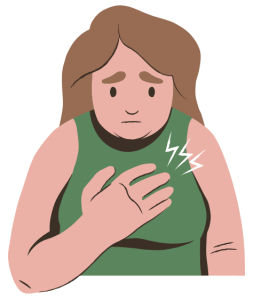 Maybe your sleep has been disrupted, maybe you have less patience, or maybe it’s just a general sense of unease that seemingly appeared from nowhere. Everyone’s experience is different. Some people live with the constant hum of anxiety, while others get massive waves that crash over them. What’s important to remember is that anxiety is not dangerous, it’s just uncomfortable. While it can feel big and powerful, it’s simply your body reacting to a perceived threat. This reaction does not mean you are in danger now. Internalizing this is the first step on your path to recovering.
There is no quick fix for anxiety, most times there are deep psychological roots that need to be unearthed and tended to. However there are many effective tools you can learn to lower your anxiety at the moment. These tools can help you regain control during an anxiety attack, and even decrease its intensity with consistent practice.
The next time anxiety strikes try:
- Breathing intentionally: One of the persistent symptoms of anxiety are shortness of breath or difficulty breathing. This lack of air can cause more panic and therefore result in a positive feedback loop. In order to stop this cycle, use some breathing strategies. This can really be anything that makes you focus on your breath, and therefore restores your normal breathing pattern. We often recommend the 4-4-6 method to clients.
 This consists of deeply inhaling through your nose for 4 seconds, holding it for another 4, and exhaling through your mouth for 6. Repeat this cycle until you feel you can return to breathing on your own.
 - Ground yourself in the present: Anxiety works a lot on speculation. The constant, “what if?” surrounds you in the future and all the possible (and usually negative) outcomes. Use grounding techniques to return to the now, because there is no way to know what happens in the future if you’re not even here in the present. Try using The Countdown Method. This is a grounding technique where you count down from 5, naming one less thing you can sense at each sense. Starting at the top, begin with 5 things you can see. From there move on to 4 things you can touch or feel, 3 things you can hear, 2 you can smell, and 1 thing you taste. This technique reconnects your mind to your body in the present, and stops the future spiral.
- Writing it out: When your mind is swirling so fast that you can’t even make out your thoughts, try writing them down. Focusing on one thought at a time in order to jot it down, slows the trickle of thoughts and allows you to gain perspective. You can do this daily with a journal, or just when it begins to feel overwhelming. Sometimes, just seeing your thoughts physically laid out in front of you can calm the raging storm. It also has the added benefit of being able to return to it later, because let’s be real: Every single one of us has had a thought that has disappeared the moment we were ready to act on it.
These are some tools you can use in the moment of heightened stress. This is for when you’re already overwhelmed, and you can feel that you may lose yourself any minute. These are very effective strategies for anxiety management, but it can be tiring to always be recovering from an attack. There are also habits you can introduce in order to reduce your anxiety levels in your day to day.
These habits include:
- Moving your body: Have you ever been so anxious you felt your heart speed up, blood rush to your ears, and your palms begin to sweat? Please take a moment now and try to think of other times you’ve felt these symptoms. You may not have been conscious of it then, but exercise does the exact same thing, with just a little more sweat. Exercise is one of the most effective ways to manage anxiety long term.
 Movement releases endorphins, decreases the amount of stress hormones in your body, and releases any pent-up energy you may have been holding. This exercise doesn’t have to be intense. Any activity that engages you, and gets your heart rate up, is acceptable.
 - Limit your consumption of stimulants and alcohol: All external chemicals play with your brain’s composition. Substances like caffeine, nicotine, and alcohol can all be a cause of heightened anxiety. Take notice of what happens after consuming any of these products. If you feel your heart beat quicken after your morning coffee, or your brain runs wild after a glass of wine, try reducing your consumption. You can also try experimenting with it. Maybe having coffee at 4pm is causing you to worry all night. Instead, try having it earlier in the afternoon or swapping it for another drink.
- Practice compassionate self-talk: Anxiety can make you feel less than, or like a failure. It’s important to remind yourself that none of this is true. Practice daily affirmations to train your brain into being compassionate towards you. Replace your critical thoughts with kind statements. When you feel like you’re “failing”, substitute that thought for, “I’m doing my best”.
One of the best things you can do for your anxiety is to reach out and talk about it. It can feel isolating, and like no one else can understand what’s going on in your body and mind, but you are not meant to face anxiety alone. Talking about what you’re feeling, whether it be with a professional or a friend, can be life changing when it comes to anxiety. Anxiety is one of the most common mental health concerns, sharing the burden can lighten the load on you and others who may be suffering from it.
Whether it’s through therapy, peer support groups, medication, or lifestyle changes, anxiety can become manageable. What may be controlling your life now, can be tamed and transformed with proper interventions.You can find balance again, you can heal, and most importantly, you can be you. Anxiety may be part of your story, but it doesn’t have to be the whole book.
Interested in beginning to treat your anxiety from home? Listen to our Clinical Director’s Podcast, Straight Talk with Sandra Reich, and gain more insights into the inner workings of your anxious mind.
How to help your anxiety from home
About the episode
Sandra is joined by Georgia Dow- a top psychotherapist from her team who is the Co-Director of Anxiety-Videos- a home study program designed to help people deal with their anxiety in the comfort of their homes. Sandra and Georgia will discuss what anxiety is and clues and strategies of what it is trying to tell you and how to work with it instead of having it work against you. Cutting edge research and latest information on anxiety treatment will be discussed. This promises to be an informative and lively hour. Don’t miss your chance to stop anxiety in its tracks- be it for yourself or a loved one and change your life today!
Listen to it here:
https://www.youtube.com/watch?v=dQHxsu1avF0&list=PL1H0sIkMEK6bWjulD8ZLASMPvsSlyizXe&index=2
Enjoyed Sandra’s insights? Subscribe to our YouTube channel and Follow us on INSTAGRAM and FACEBOOK for daily tips, tricks, and inspiration.
Are you always thinking? It’s natural to be anxious sometimes, but it should not be interfering with your life. At The Montreal Center for Anxiety and Depression we have top specialists who can teach you to manage your anxiety and discover its roots. It would be our absolute pleasure to match you with a therapist who can help you regain your control over your own life.
To find your therapist now, give us a call at 514 777-4530 today. We would love to help you, and get you started on your journey. Change your life… TODAY!
