
It all starts like any other thought. We don’t always share this out loud, but here’s the truth: We all have thoughts that feel a little… off sometimes. A strange image, a momentary “what if?”, a thought that doesn’t align with how you usually think. The quick flash of a thought often makes us do a double take. 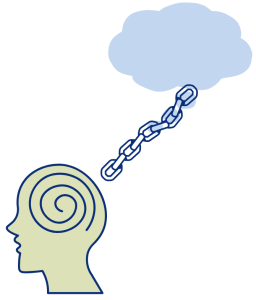 Usually, the disturbance fades away within seconds, taking the discomfort with it. For some people, though, it doesn’t disappear into the background. It lingers. It repeats. It starts to overtake their daily thoughts, and feels like it must be figured out, solved, or controlled. Before long, these thoughts begin to take up space in their lives. This is often where OCD can take root.
There’s a question that often circulates as to what exactly OCD is. Obsessive-Compulsive Disorder is a mental health condition where someone can experience recurring, unwanted thoughts, which can become obsessions. They then can feel driven to respond to them with certain actions or mental rituals almost instinctively. Those are the compulsions. These thoughts aren’t enjoyable, and the behaviours aren’t done necessarily for pleasure. They’re done to relieve anxiety, create certainty, or “prevent” something bad from happening. Even then, the relief is usually temporary, which is what unfortunately keeps the cycle going.
What’s important to distinguish is the thought and the after. OCD isn’t about the thought itself. Rather it describes the way the mind latches onto it. Intrusive thoughts are something that almost everyone experiences. In the majority of cases, they’re so strange that they’re instantly cleared from the conscious mind. When someone with OCD experiences an intrusive thought, their brain doesn’t just let it go. It starts asking questions, searching for certainty, and trying to analyze something that was never meant to be toyed with for more than a few seconds.Thoughts begin to form a storm: Why did I think that? What if it means something? What if I can’t control it? The problem with this process is the more attention the brain applies to these types of thoughts, the more real and convincing they become.
It’s natural to try to do something when a situation is proving to be uncomfortable. The instinct is to check, to seek reassurance, to mentally go over it one more time- just in case. Sometimes it shows up as repeated cleaning or checking. 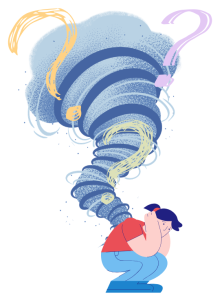 Other times, it’s fully internal. Like mentally repeating conversations word for word or trying to cancel out one thought with another. Whether internally or externally, the end goal is the same: relief. Truth be told, it works… for a moment. This is because each time we respond to the thought, we give it a certain amount of importance. The brain takes that response as proof that it is important, and sends it back again. And again. And again. Over time, this creates a loop that is incredibly hard to break out of. Not because that person isn’t trying or doesn’t want to. The difficulty is caused by their brain’s attempts to keep them safe. Albeit in an overprotective way.
What makes this even more frustrating is that many people with OCD are fully aware that their thoughts don’t quite make sense. There’s often a part of them that can step back and recognize that the fear is exaggerated or unlikely. But that awareness doesn’t turn the volume down. The urgency is still there, pulling for attention. That’s because OCD doesn’t just involve thinking patterns. It also involves how the brain processes signals. You can think of it like an alarm system that’s a little too sensitive. It goes off at the wrong times, and once it’s on, it’s not easy to shut off. Something small or harmless gets flagged as important, and the brain struggles to let it go. When you add in things like stress, personality, or even genetics for some people, that system just gets louder over time.
One of the reasons OCD can feel so convincing is because it tends to latch onto what matters most. Thoughts often show up around themes like safety, responsibility, relationships, identity, or doing the “right” thing. The distress doesn’t come from the thought being true, it comes from how much the person cares about each theme. In a strange way, the intensity of the reaction says more about someone’s values than the thought itself ever could.
So what actually helps? What’s often surprising is that the goal isn’t to get rid of the thoughts.Trying to control or eliminate them usually has the opposite effect. It only helps with making them more persistent, more disturbing, and more pronounced. Instead, treatment focuses on changing one’s relationship with those thoughts. Teaching people how to experience them without immediately reacting. Approaches like cognitive behavioural therapy, particularly exposure and response prevention, are built around this idea. Rather than avoiding discomfort, these therapies gently guide people toward it.  These techniques are key to helping them sit with the thought without doing the usual things that bring short-term relief. It’s not easy at first, but over time, the brain begins to learn something new: that the thought isn’t dangerous, that anxiety can rise and fall on its own, and that certainty isn’t actually required to move forward. For some people, medication can also be a helpful part of this process, making it easier to engage in therapy and reducing the intensity of the cycle.
Perhaps the most meaningful shift, though, is a simple one. We’re used to treating thoughts like signals. Like they mean something, require action, or say something about who we are. OCD challenges that idea. It suggests a different way of looking at things. Sometimes thoughts can just be thoughts. Temporary, automatic, and not nearly as important as they feel in the moment.
OCD can be isolating, especially when the thoughts themselves feel difficult or embarrassing to share. The thing is, it’s far more common than people realize, and more importantly, it’s treatable. With the right support, people can learn to step out of the cycle, loosen the grip of intrusive thoughts, and reconnect with their lives in a way that feels more present and less controlled by fear. In the end, it’s not about having perfect thoughts. It’s about realizing you don’t need to follow every single one.
When your mind won’t let go of a thought, the instinct is often to figure it out, fix it, or make it go away. What if the real shift isn’t in controlling the thought; but instead how you respond to it? Start by listening to our Clinical Director’s Podcast, Straight Talk with Sandra Reich, and learn more about the nature of intrusive thoughts, why they feel so convincing, and how to begin stepping out of the cycle that keeps them going.
Understanding Obsessions and Compulsions – OCD
About the episode
Sandra and her colleague Georgia Dow tackle the challenging topic of Obsessive Compulsive Disorder; both in severe versions as well as how many of us become obsessive or compulsive in day to day life. The dangers of such compulsions and obsessions will be discussed as well as treatment for OCD (latest research developments). What should you do if you notice your child developing obsessive and/or compulsive habits? What if you are obsessing? Does it definitely mean OCD? Find out all about this serious anxiety disorder and learn how to understand yourself and others better on this very important episode of “Straight Talk.”
Listen to it here:
https://www.youtube.com/watch?v=DvP7AOm66GM&t=2s
Trying to eliminate fear or control every thought can actually make them stronger. Avoiding discomfort in the moment may feel helpful, but over time, it reinforces the cycle that keeps OCD going. At The Montreal Center for Anxiety and Depression we have top specialists who can help you break this cycle. It would be our absolute pleasure to match you with a therapist who can support you on this journey.
To find your therapist now, give us a call at 514 777-4530 today. We would love to help you, and get you started on your journey. Change your life… TODAY!
